Frogspawn and Tadpoles, 2025
Some inside and some outside.
Here's a slideshow of mother nature doing her own thing in my Somerset garden.
Most of the rest of this page is about frogspawn in tanks in my garage in 2025.
But here some are some weekly video loops taken in 2026.
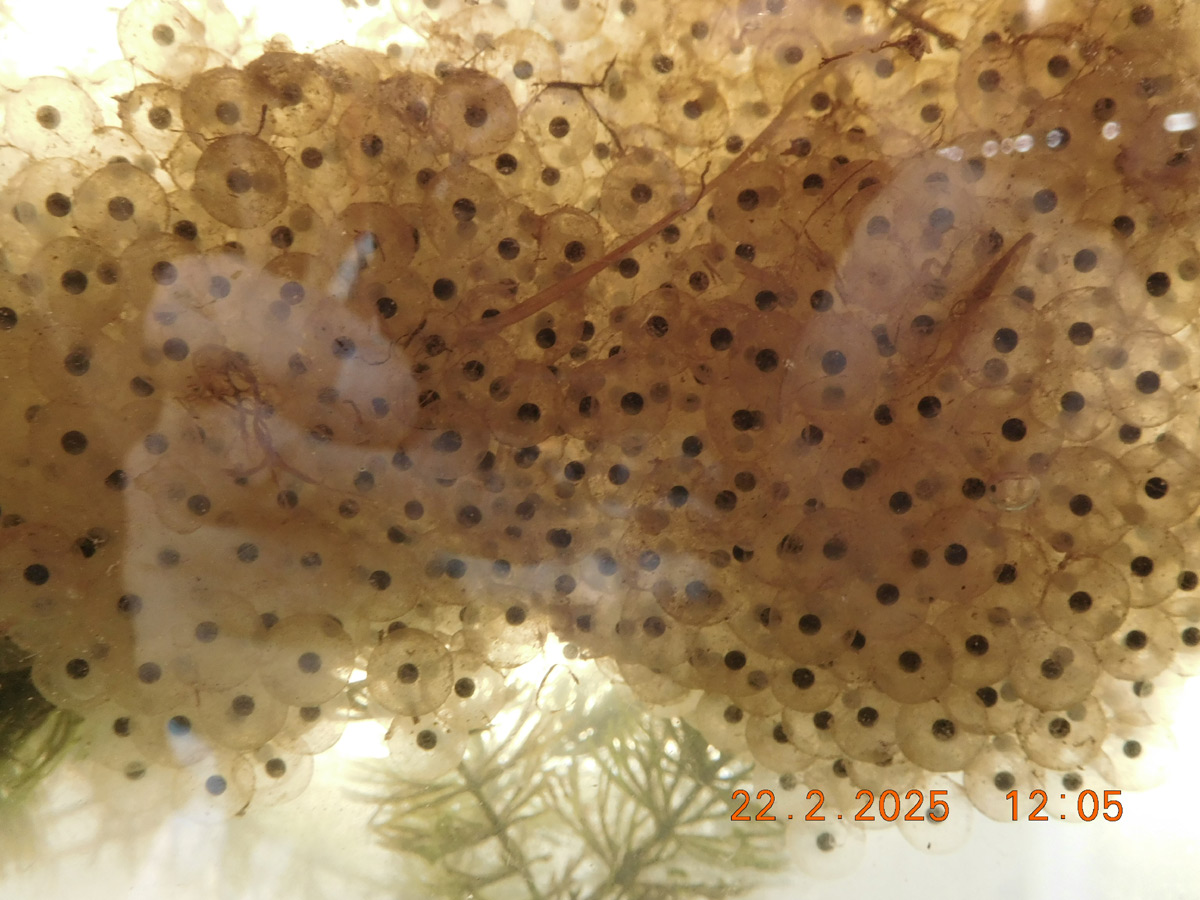
DAY 1 - 22nd FEB 2025
22nd February was the date I collected the frogspawn. I don't know when it was laid. I collected two clumps from two unconnected sites about a mile apart. The weather was quite cold, so any development thus far would have been slow. The embryos , the little black dots that would develop into tadpoles before metamorphosing into frogs, still resembled full-stops.
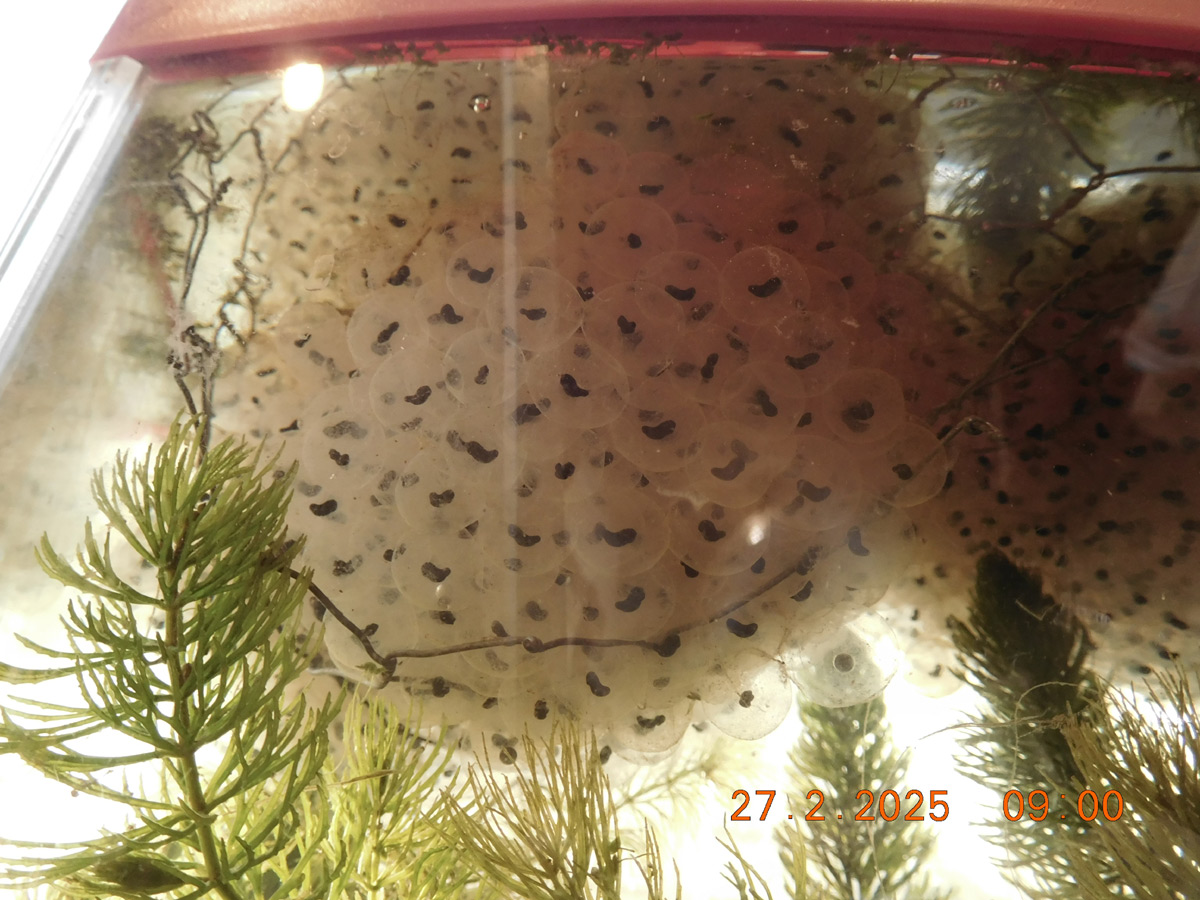
Day 6 - 27th FEB 2025
In less than a week the embryos had visibly developed into pronounced ‘commas’ with heads clearly identifiable. Embryos in the garden pond remained obdurately full stopped. I put some wire netting in the aquarium to keep the spawn near the surface rather than let it sink to the bottom.
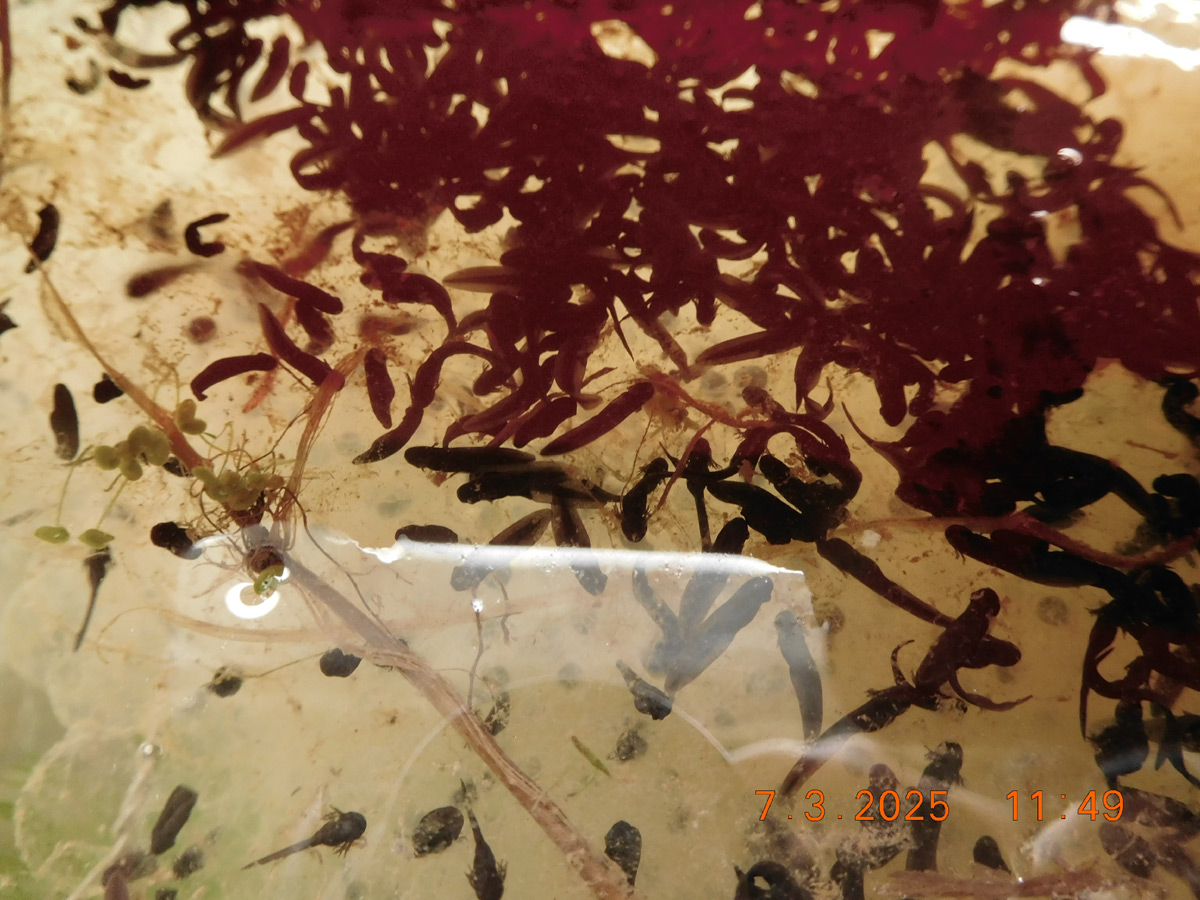
Day 14 - 7th March 2025
The tadpoles had mostly wriggled free of the jelly but were not actively swimming as yet. Their gills were still clearly visible outside their bodies. About a third of the spawn showed no signs of any development and remained ‘unhatched’.
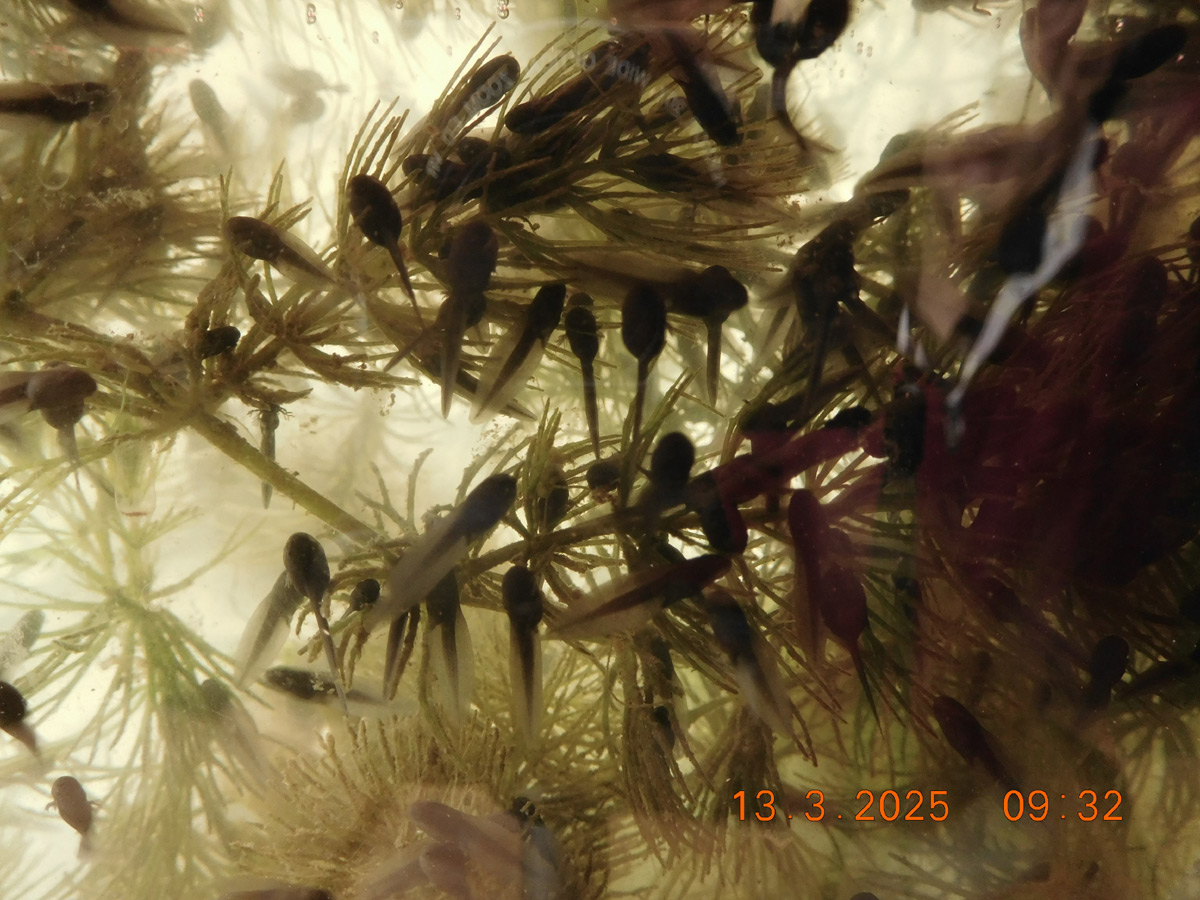
Day 20 - 13th March 2025
Most of the viable embryos seemed to have hatched. Their gills had been enclosed by an operculum and they now looked like ‘proper’ tadpoles.
Day 23 - 16th March 2025
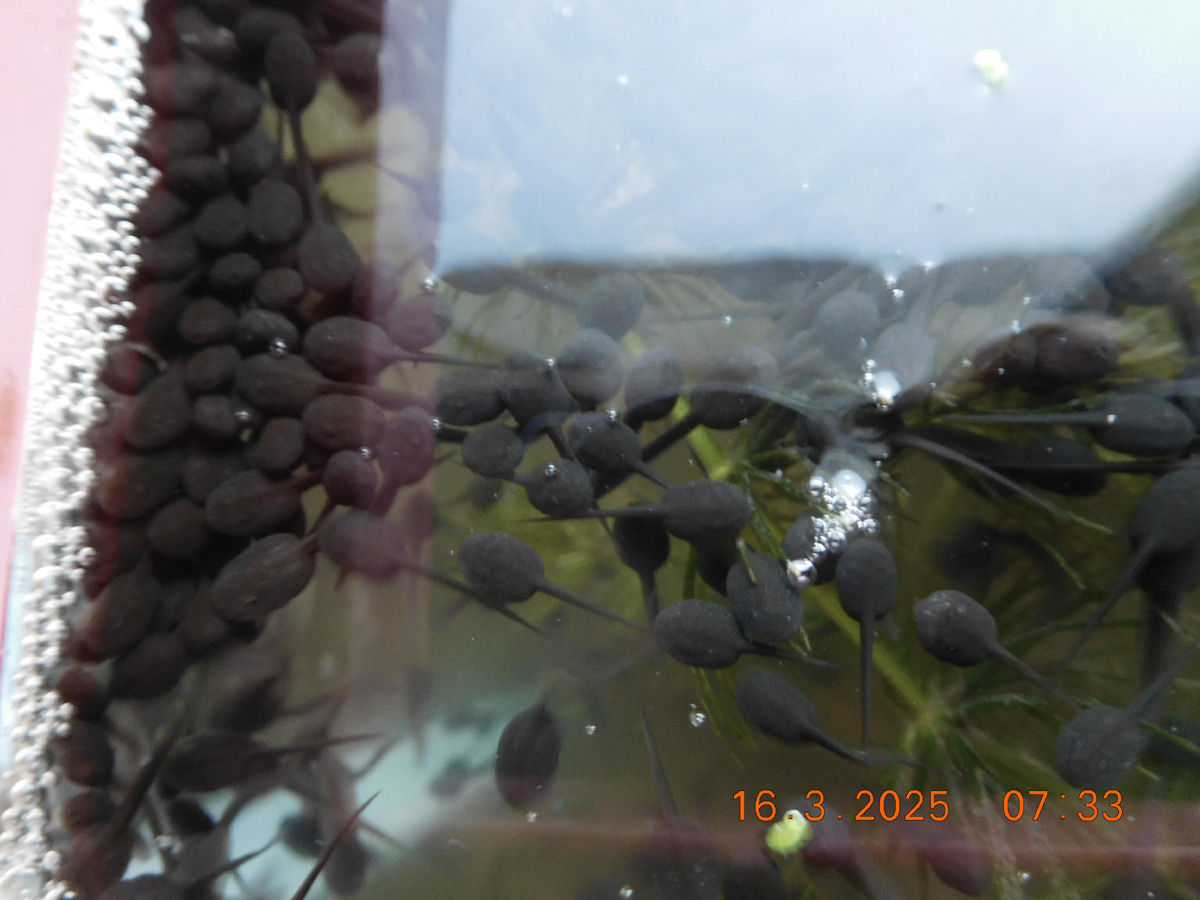
The tank seemed to have too many tadpoles for one smallish tank. I got another. The silvery bobbles at left are bubbles that the tadpoles exhaled. They swam up to the surface, sucked in a bubble of air then released it where, as often as not, it remained floating along with their brothers' and sisters' contributions.
Day 35 - 28th March 2025
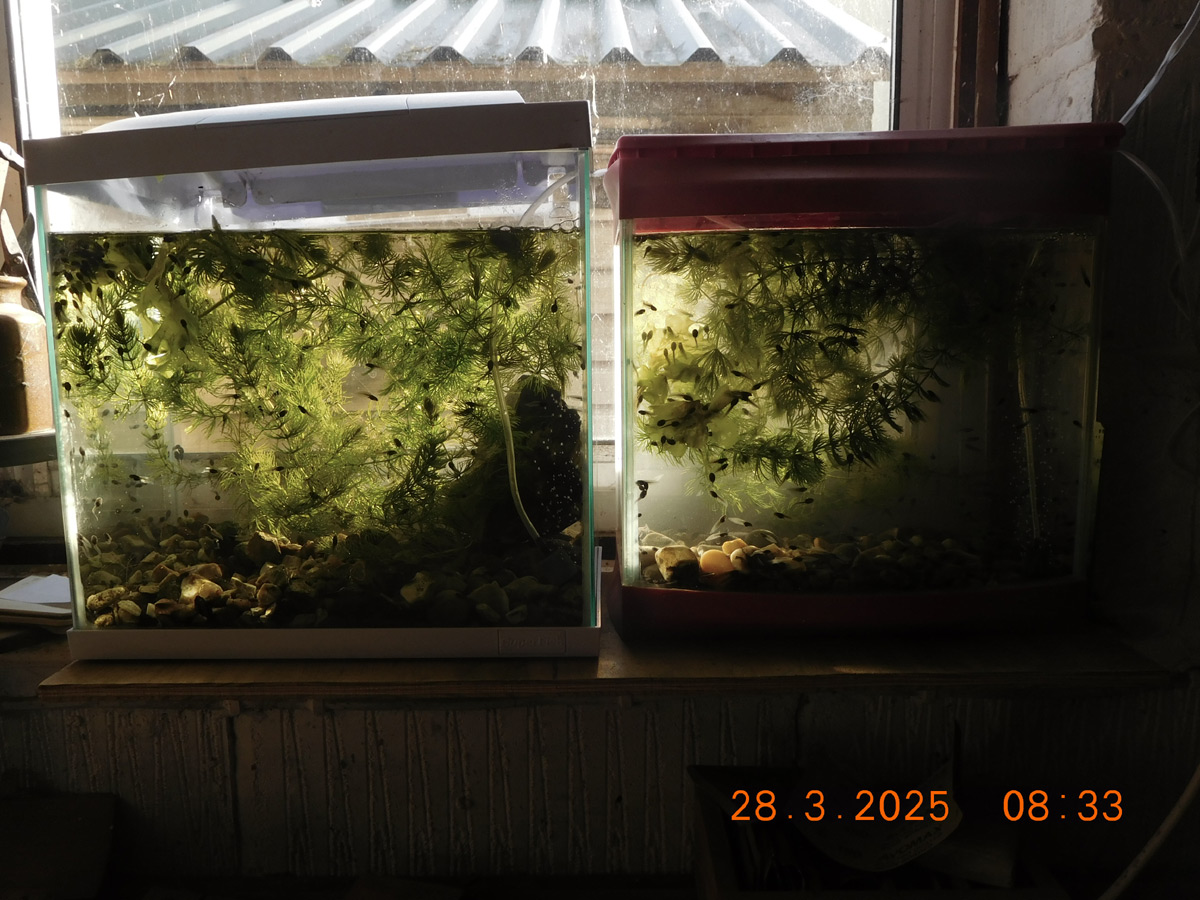
I moved about half the tadpoles from the original tank and put them in the second, similar sized [c. 36 litres] tank. I removed what was left of the frogspawn clumps and put them in a pond in the garden in which there are newts who I assumed would make short work of any remaining spawn.
Day 36 - 29th March 2025
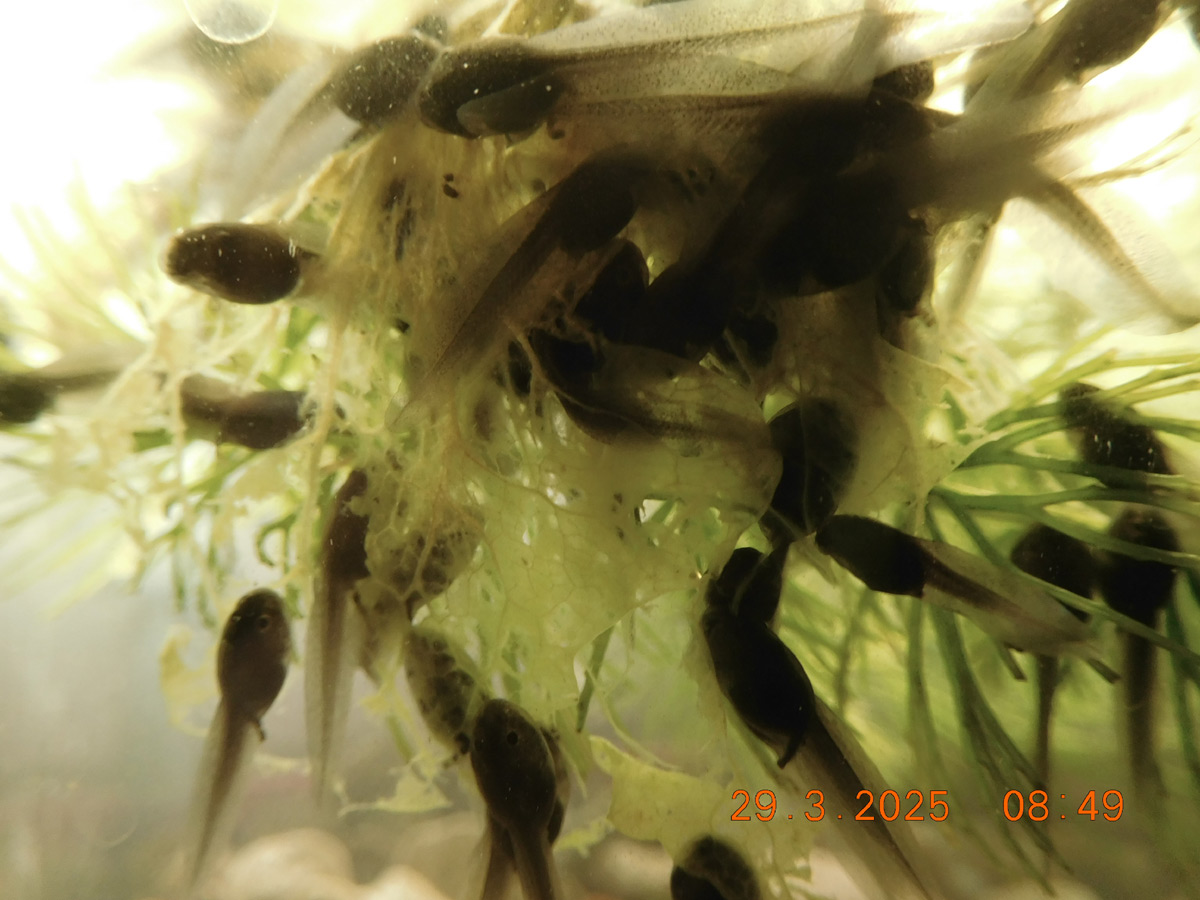
I began feeding the tadpoles regularly with boiled lettuce. Later on they got the occasional treat of boiled spinach. At first, i.e. around day 36, one lettuce leaf per tank lasted a couple of days. After a couple of weeks they got one or two leaves a day. Lettuce needs to be boiled to soften the cellulose and other plant matter sufficiently for the tadpoles to be able to eat it. Boiling also kills any pathogens. Pour boiling water on the lettuce and let it simmer for a couple of minutes. Serve cold! They eat the ‘leafy’ parts first leaving the skeletal ribs and spine of the leaves which they will also eventually consume. You eat the ice cream before the cone.
Day 38 - 31st March 2025
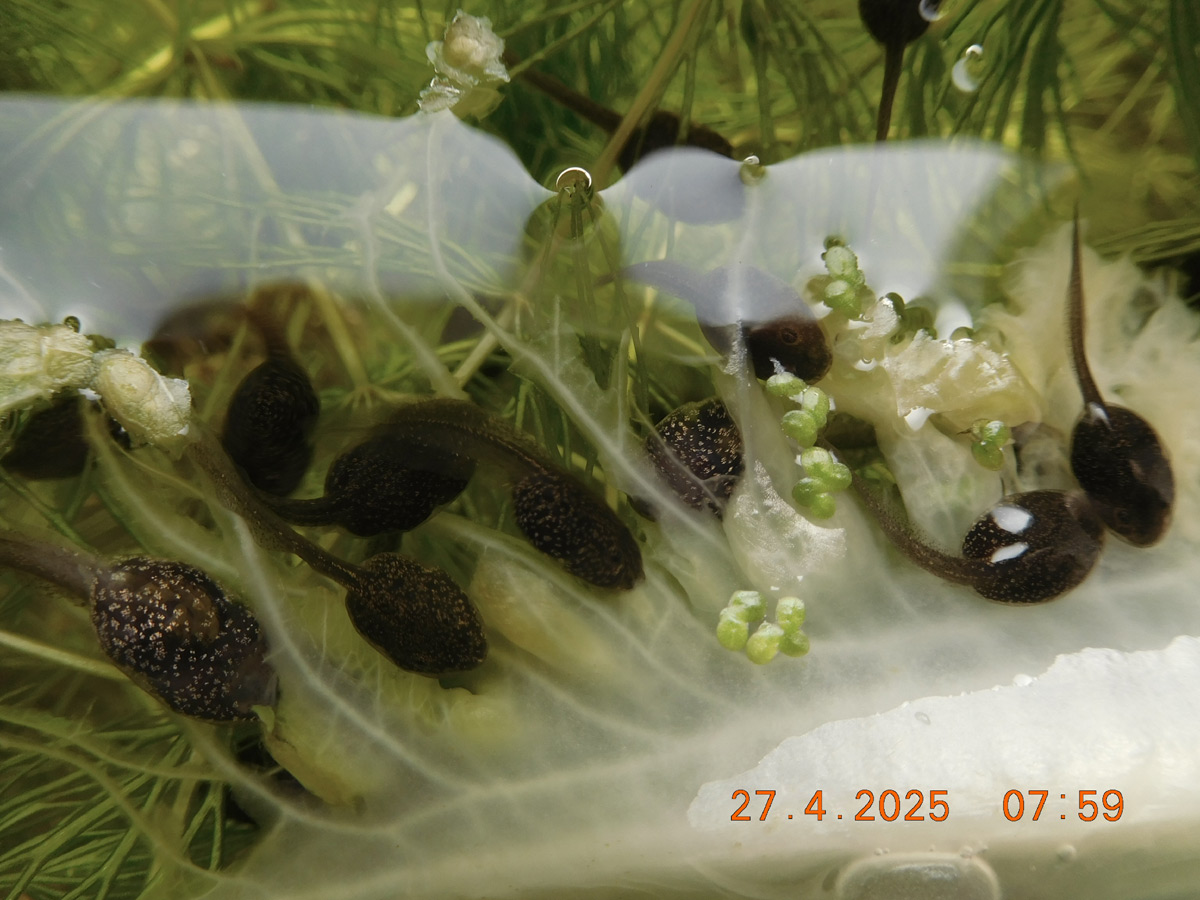
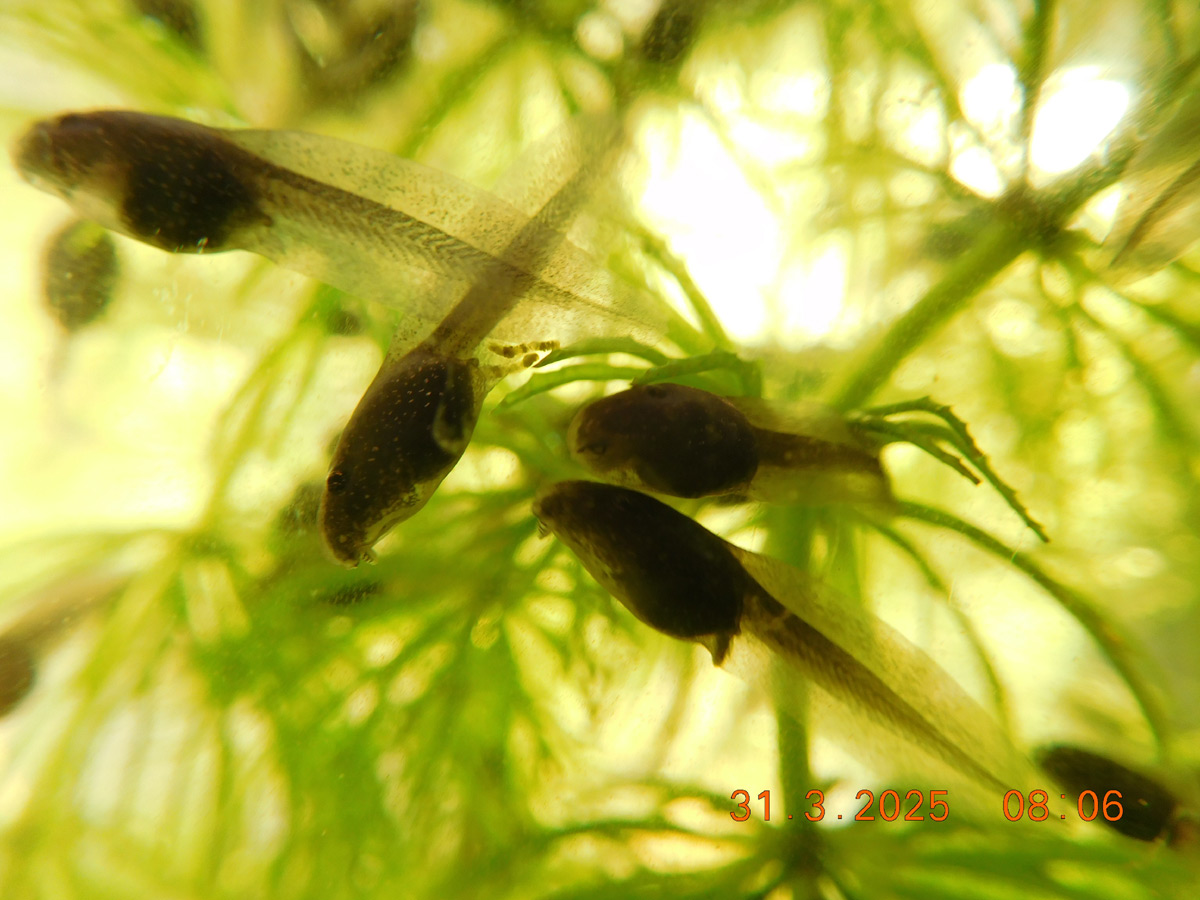
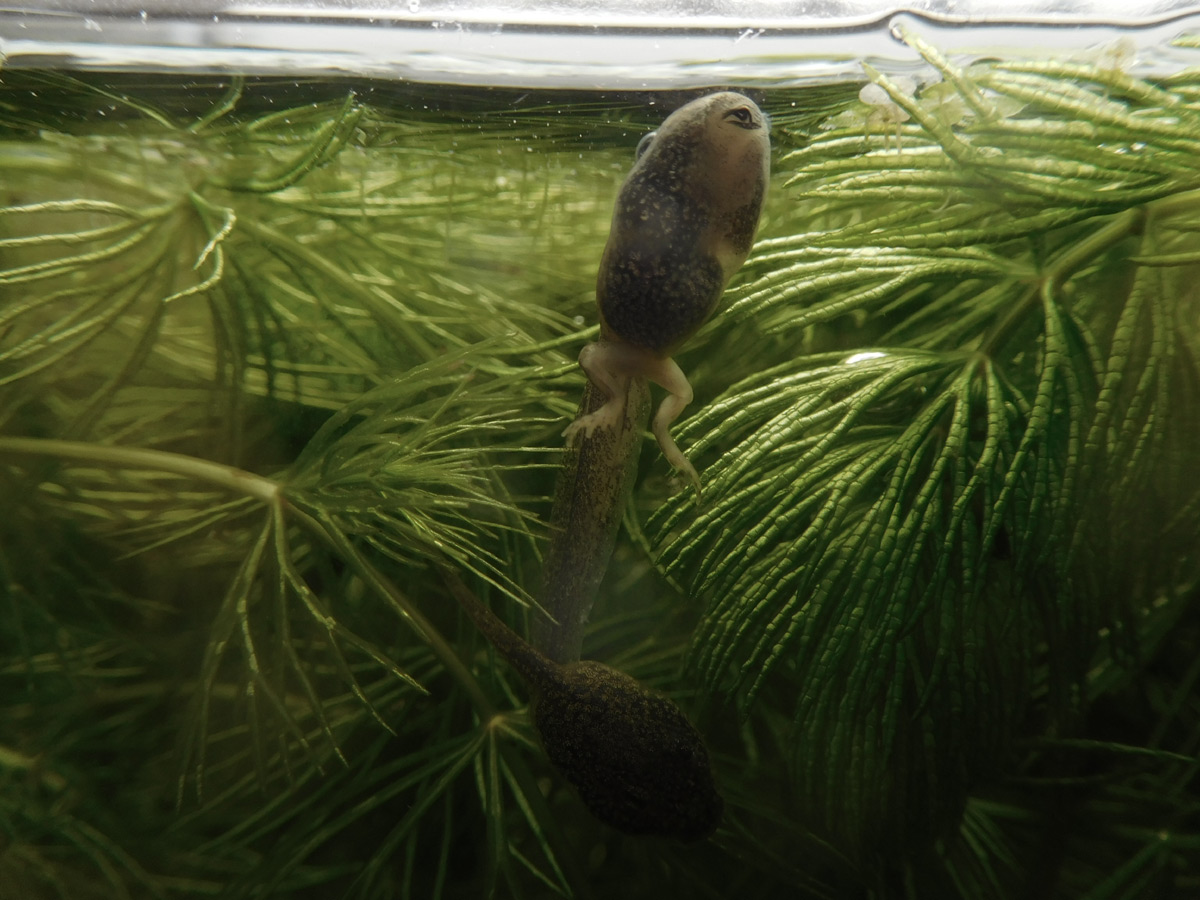
The diet seemed to suit them and the tadpoles were beginning to show promise of the frogs to come. Some were twice the size of others; sexual dimorphism? Over the next month observable changes were undramatic until back legs began to appear in mid-April. These seemed to be useless apendages at first as the tadpoles continued to rely on their tails as their main means of propulsion.
Day 45 - 7th May 2025
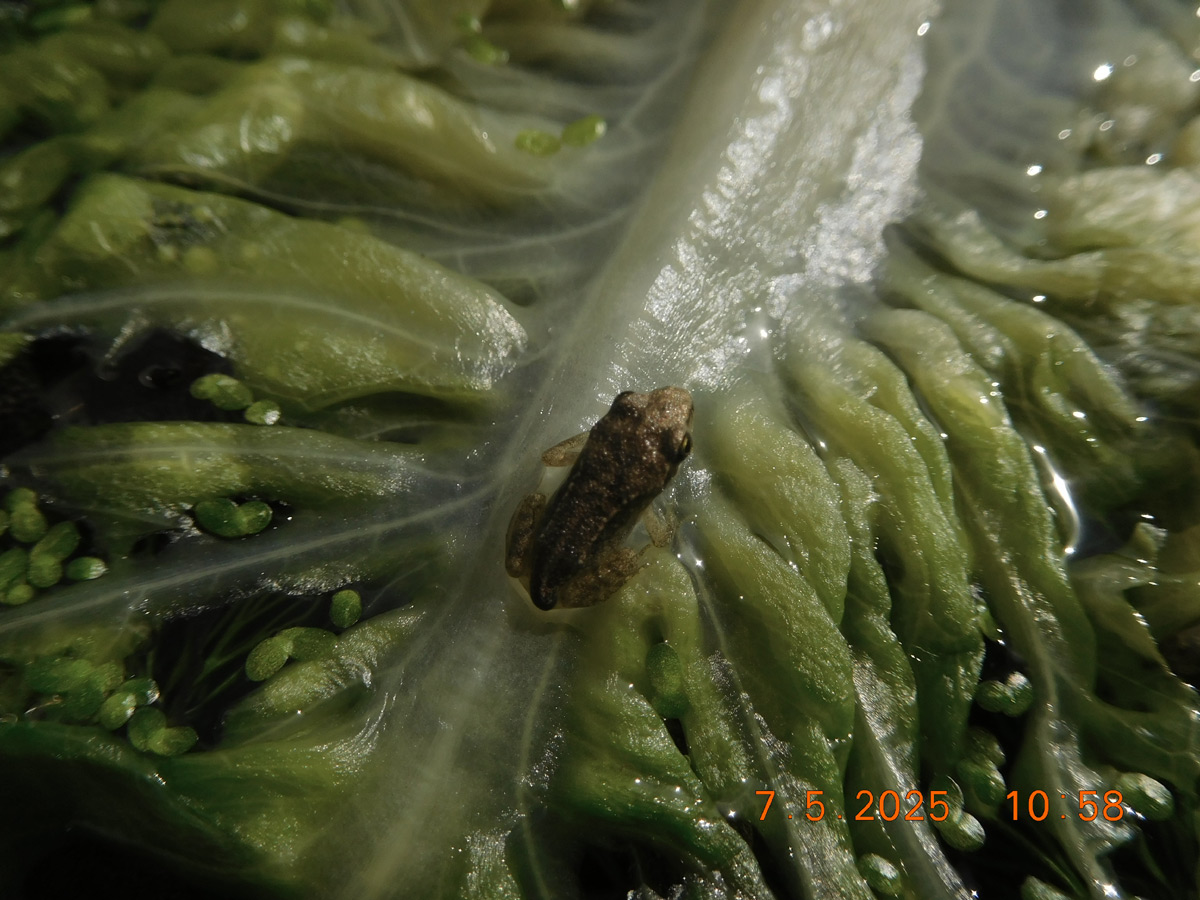
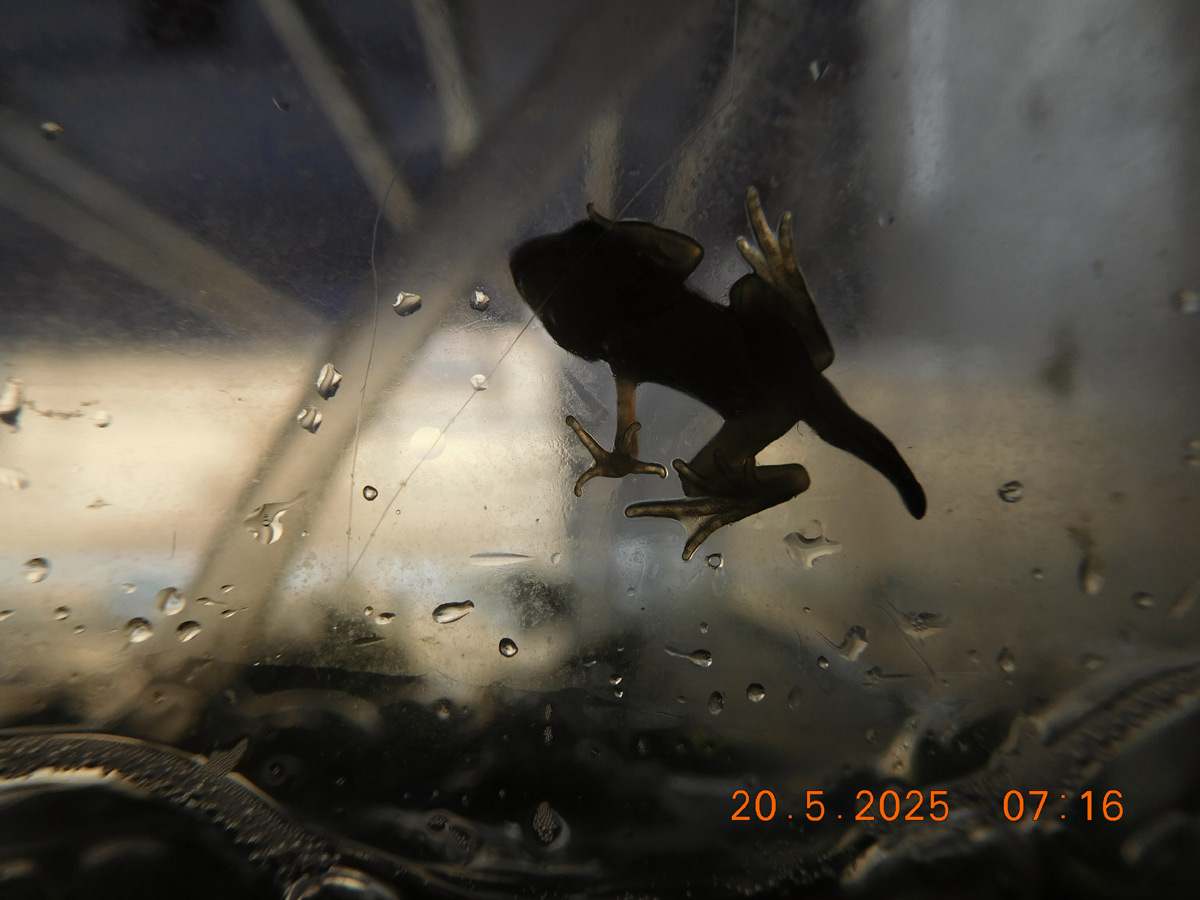
Until one day, bingo! Rana temporaria - who was duly released into the great outdoors. And then another. And another. They are unbelievably vulnerable and small, about the size of half a peanut. Even a blue tit would have no difficulty swallowing one. As the froglets were clearly intent on escape I decided another drastic thinning of livestock and plants was necessary, downsizing to one tank. The reduction also made it easier to observe what was left. One thing that was left was the enemy.
Day 55 - 17th May 2025
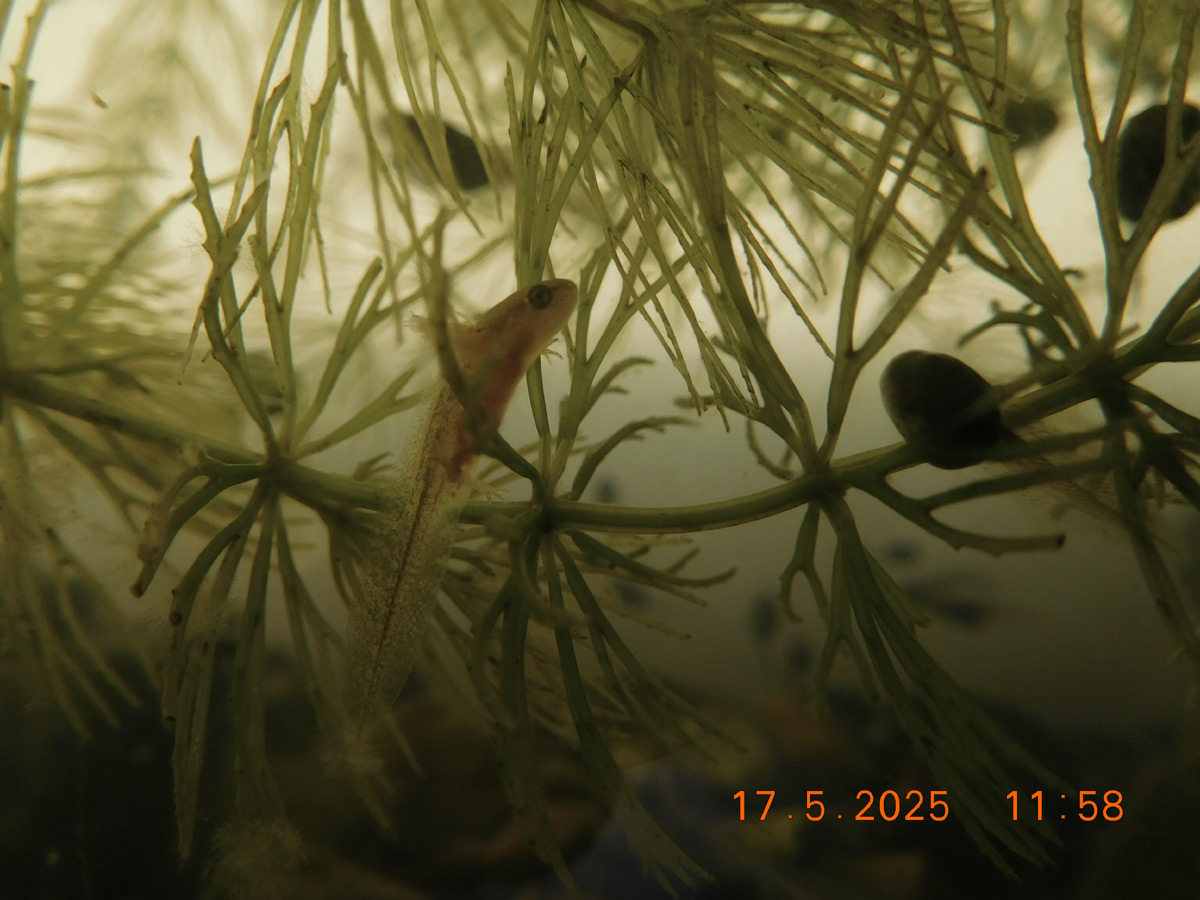
I must have inadvertently admitted this critter, probably Lissotriton vulgaris , as an egg on one of the plants gathered from an outside pond. As it was smaller than most of the other tadpoles I decided to leave it in situ and await developments. In due course I will release it in another pond known to have newts.
Day 56 - 18th May 2025
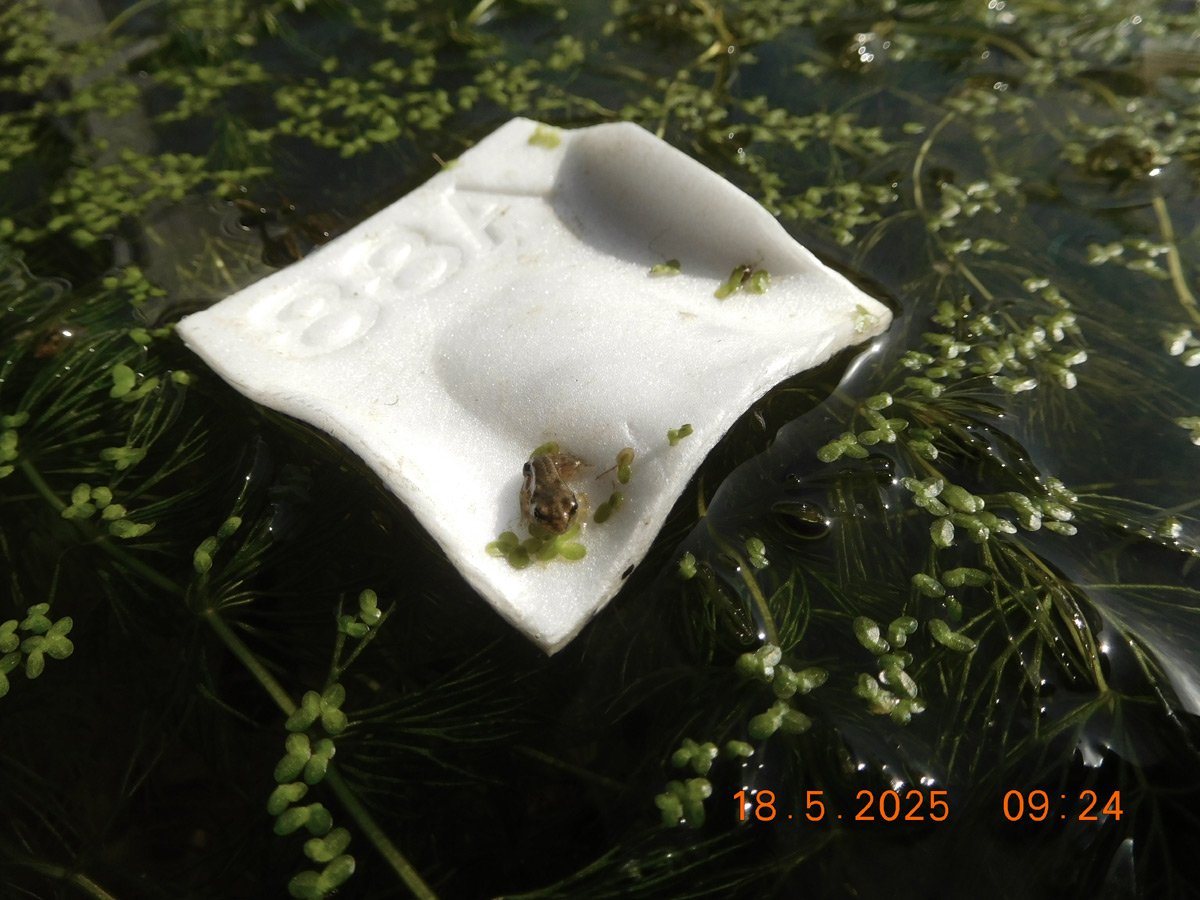
Having reduced the vegetation in the tank quite a bit there was less of a floating platform for the froglets to sit on as they contemplate their next move, so I made them a polystyrene lily pad on which I find a young hopeful perched, ready for lift-off, most mornings. I release them outdoors in a nursery tank - see next. It is THIS SORT OF BEHAVIOUR that is quite intolerable!
Day 57 - 19th May 2025
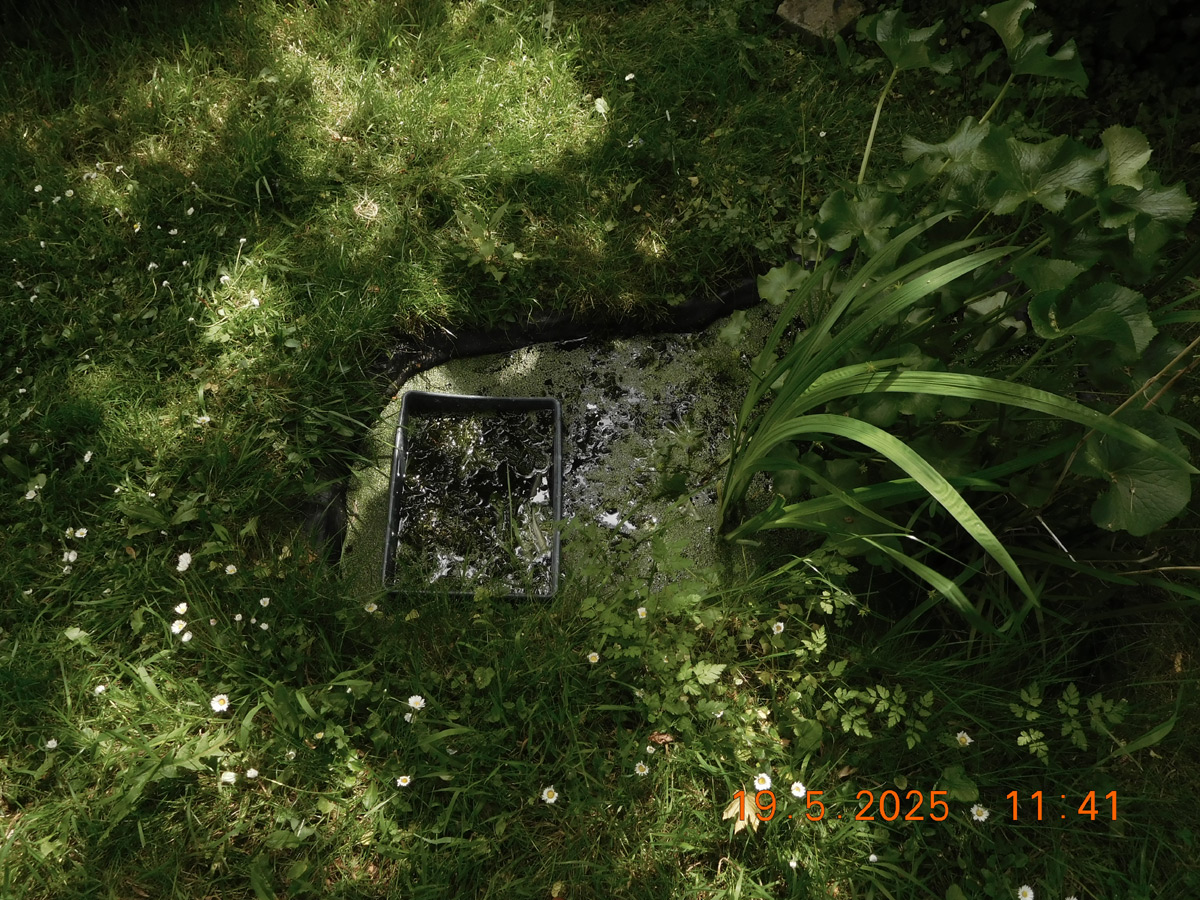
This pond was the home of a lonesome male for a couple of years but I have never found any spawn in it. He ceased to sing last summer [2024] at a time when there were numbers of magpies and herring gulls in the neighbourhood. There are also newts in this pond. Dumping excess tadpoles directly into the pond would be counter-productive as far as encouraging a local population of frogs is concerned, so when ‘downsizing’ to one tank I put the tadpoles in a semi-submerged plastic holding tank without any holes other than its open top. Emerging froglets from the aquarium are also released into the box. From there the world is their oyster.
THE END
Except of course it isn't, because:
“In my end is my beginning.”
Go frogs!
Duncan Linklater © 2025