What Became of Kilvert's Pips?
Click HERE to find out.
 The sequence of images in the link above shows how to turn a wooden
bowl from green apple. ‘Green apple’ refers to the wood
rather than the fruit, ‘green’ timber in general being
timber that is unseasoned and wet. Turning such wood is referred to
as green turning. When fresh felled, apple is VERY wet; so wet that
water is thrown from the turning wood in a fine, refreshing,
mildly-scented, drizzle in sufficient quantities to soak the turner.
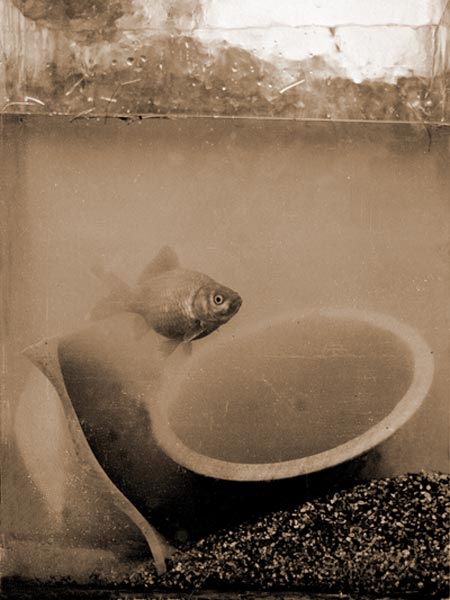
Green apple is heavier than water as the image at right attests as
well as giving a different perspective on gold-fish bowls. Yes,
that's a real picture and no, I did not nail a piece of lead to the
bottoms of the bowls!
The sequence of images in the link above shows how to turn a wooden
bowl from green apple. ‘Green apple’ refers to the wood
rather than the fruit, ‘green’ timber in general being
timber that is unseasoned and wet. Turning such wood is referred to
as green turning. When fresh felled, apple is VERY wet; so wet that
water is thrown from the turning wood in a fine, refreshing,
mildly-scented, drizzle in sufficient quantities to soak the turner.
Green apple is heavier than water as the image at right attests as
well as giving a different perspective on gold-fish bowls. Yes,
that's a real picture and no, I did not nail a piece of lead to the
bottoms of the bowls!
 The images arose out of my acquiring some twenty tons of apple logs
from an old cider orchard on Newton's Farm in Herefordshire. This
has no connection with Sir Isaac that I know of, in spite of the
apple theme. The orchard was cleared of all its fine old trees in
favour of planting small, nondescript modern, easy picking things by
a commercial maker of chemical beverages, who shall remain nameless,
which has the effrontery to market the stuff as cider. Converting
twenty tons of timber into bowls leaves one with plenty of time for
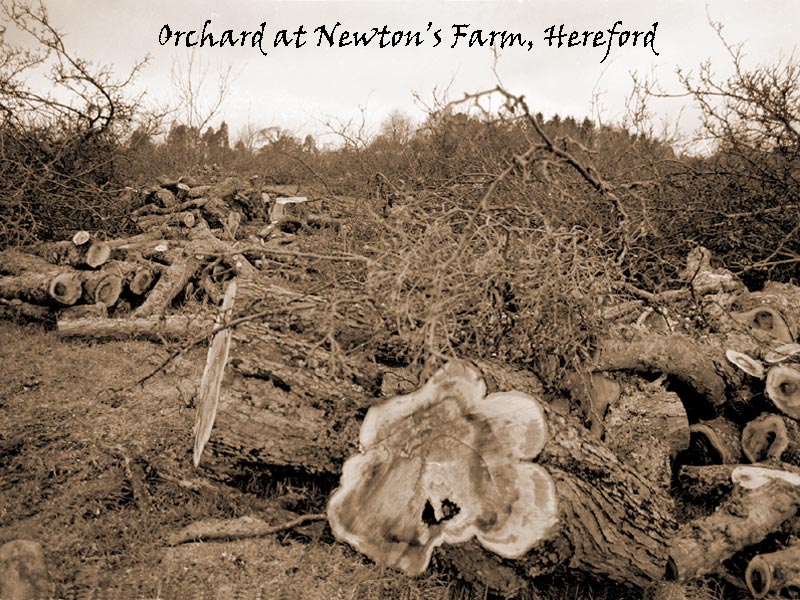
thought. The images in the slideshow resulted. The butts in the
foreground of the image at left of the vandalised orchard were over
4 feet in diameter.
The images arose out of my acquiring some twenty tons of apple logs
from an old cider orchard on Newton's Farm in Herefordshire. This
has no connection with Sir Isaac that I know of, in spite of the
apple theme. The orchard was cleared of all its fine old trees in
favour of planting small, nondescript modern, easy picking things by
a commercial maker of chemical beverages, who shall remain nameless,
which has the effrontery to market the stuff as cider. Converting
twenty tons of timber into bowls leaves one with plenty of time for
thought. The images in the slideshow resulted. The butts in the
foreground of the image at left of the vandalised orchard were over
4 feet in diameter.
The twenty tons I acquired was but a tiny portion of the timber that was felled. From memory [this was back in the early 1990s] I'd say I took less than ten percent. Some of the remainder was sold as firewood by the owner; the bulk went up in a massive conflagration - not green at all! Living, as I now do, in Somerset, another area famous for its cider, I have been struck by how small the local apple trees are in comparison with those I got from Newton's Farm and elsewhere in Herefordshire. Either apple trees grow bigger in Herefordshire or all the big old trees in Somerset have vanished. Apple wood has very limited use. Even as firewood, it requires twice as long as any other timber to dry adequately on account of its initial wetness and its density. The latter contributes to its propensity to split during drying; even sawn into planks it tends to shake and split. Once dry, it is very, very hard indeed. I know of only one commercial use for apple apart from small turnery; it was cleft and used as inserted teeth in milling cog-wheels where, because of its hardness, it lasted well when alternated with metal cogs. Metal on metal cogs can produce sparks; especially undesirable when milling gunpowder, but generally undesirable as many substances reduced to fine powder are potentially explosive as the wood-burner in my workshop could testify.
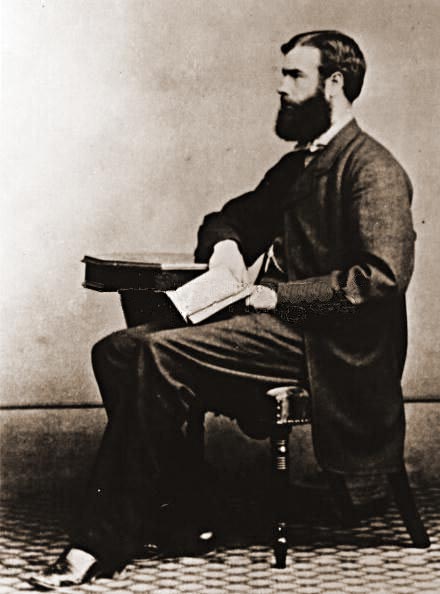 The Rev. Francis Kilvert (1840-1879) had the cure of souls in three
parishes on the English-Welsh border in the second half of thre 19th
century. He was an inveterate walker who recorded his extensive
peregrinations in diaries kept between 1870-79. Some of them have
been published - much emended. Parts of them were destroyed by his
family for reasons that are not hard to guess. Some passages from
the published diaries suggest that the Rev. Francis Kilvert, in
common with another celebrated reverend gentleman, shared a
fascination with small girls that today would probably have clapped
in the tolbooth or worse. See
here
for one rather charitable view of Kilvert, although Mr Corfield
clearly deserved horse-whipping.
The Rev. Francis Kilvert (1840-1879) had the cure of souls in three
parishes on the English-Welsh border in the second half of thre 19th
century. He was an inveterate walker who recorded his extensive
peregrinations in diaries kept between 1870-79. Some of them have
been published - much emended. Parts of them were destroyed by his
family for reasons that are not hard to guess. Some passages from
the published diaries suggest that the Rev. Francis Kilvert, in
common with another celebrated reverend gentleman, shared a
fascination with small girls that today would probably have clapped
in the tolbooth or worse. See
here
for one rather charitable view of Kilvert, although Mr Corfield
clearly deserved horse-whipping.
Kilvert's Diary is worth reading for other reasons. Begun in 1870, it records, in evocative and humorous detail, the people and places he visited on his extensive parochial wanderings and opens a window on the wretched condition of the rural poor in Victorian Herefordshire. Among many places he visited was Kinnersley, the location of Newton's Farm, which is only some five miles from two of the places where Kilvert lived, Bredwardine and Clyro. Kilvert died in 1879 aged 38. Among the mourners was his wife of five weeks.
Just below grew an apple tree whose bright red boughs and
shoots stood up in beautiful contrast against the light blue
mountain and grey town and the blue valley.
And the grey tower of Clyro Church peeped through the bright
red branches. From the stile on the top of the hill the sun
set in a crimson ball behind the hills or rather into a
dense ball of dark blue vapour. In the afterglow scarlet
feathers floated in the sky, and the gorse deepened into a
richer red gold in the sunset light.
Did he pick such an apple and eat it one day on his way to Kinnersley? It struck me as not beyond the realms of possibility that some of the trees at Newton's Farm could trace their lineage to the said Rev's pips. Unlikely, admittedly - but it all helped pass the time at the time.
Duncan Linklater © 2025